

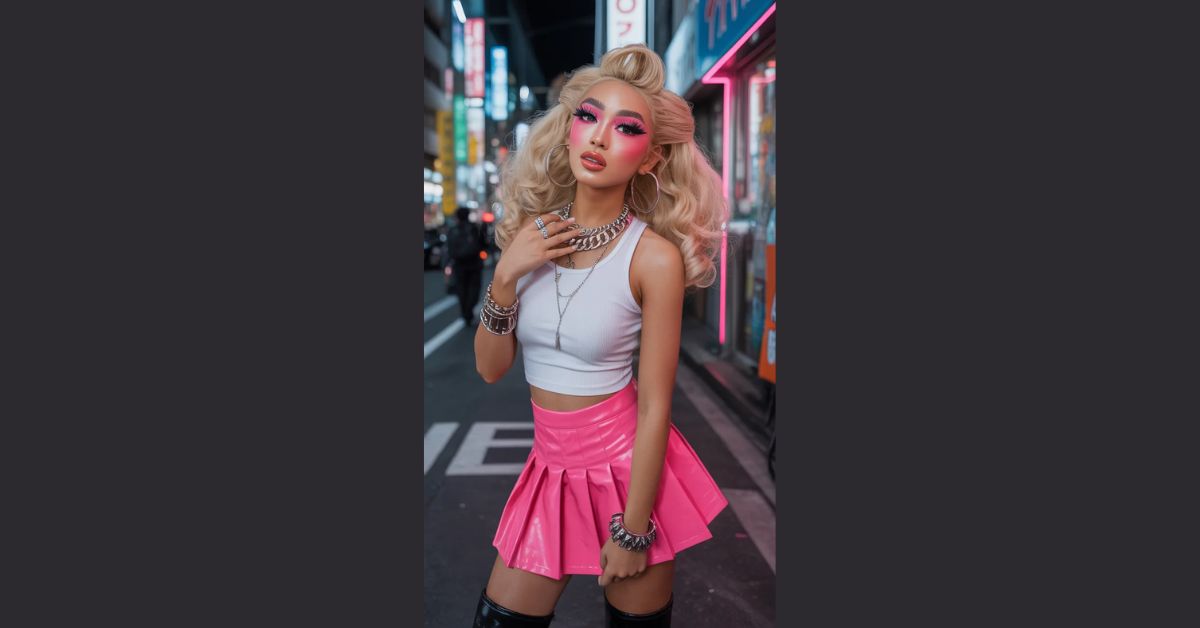
What happens when an entire generation of young women decides to reject the traditional beauty standards of their society and reinvent themselves through dramatic makeup, bleached hair, and fearlessly expressive fashion? In Japan during the 1990s, the answer was Gyaru Fashion — one of the most visually striking and culturally significant street fashion movements the world has ever seen. Far more than just a trend, Gyaru became a lifestyle, a community, and a bold statement of identity that challenged the deeply rooted norms of Japanese femininity. Today, it continues to inspire fashion lovers, makeup artists, and subculture enthusiasts across the globe.
What Is Gyaru Fashion and Where Did It Begin
Gyaru, derived from the English word “gal,” is a Japanese fashion subculture that first emerged in the early 1970s but exploded into mainstream consciousness during the 1990s. At its core, Gyaru is defined by its unapologetically bold aesthetic — heavy makeup, tanned skin, long decorated nails, voluminous hair, and eye-catching clothing that commands attention. The style was, and still is, a direct rebellion against the conventional Japanese ideal of pale skin, natural makeup, and modest, understated femininity.
The roots of the movement can be traced to the Shibuya district of Tokyo, which became the spiritual home of Gyaru culture. Young women, many of them teenagers and university students, gathered in the streets and shopping centers of Shibuya to showcase their looks, form social circles, and define an identity entirely their own. According to fashion historians, by the late 1990s, Gyaru had grown into a multi-billion-yen industry in Japan, with dedicated magazines, stores, brand collaborations, and even entire shopping floors devoted to the aesthetic.
The Cultural Rebellion Behind the Style
Understanding Gyaru requires understanding the social context in which it was born. Japanese society places significant expectations on women regarding appearance, behavior, and conformity. The traditional ideal of the “Yamato Nadeshiko” — a graceful, humble, pale-skinned woman devoted to family and social harmony — was the dominant feminine archetype for generations. Gyaru was its antithesis.
By tanning their skin, bleaching their hair, and applying theatrical layers of makeup, Gyaru women were making a conscious cultural statement. They were rejecting the idea that femininity must be subtle, that beauty must be natural, and that young women must prioritize the approval of employers or elders over their own self-expression. Sociologists studying Japanese youth culture have noted that Gyaru represented one of the first major visible youth rebellions in postwar Japan, one that was deeply personal and expressed through the body itself rather than through protest or politics.
The Most Iconic Gyaru Substyles Explained
One of the most remarkable aspects of Gyaru culture is the sheer diversity of its substyles. Rather than being a single monolithic look, Gyaru evolved into a sprawling ecosystem of distinct aesthetics, each with its own rules, communities, and iconic figures.
Ganguro is perhaps the most extreme and internationally recognized substyle. Characterized by very dark artificial tans, bleached white or platinum hair, and stark white or neon makeup applied around the eyes and lips against the dark skin, Ganguro pushed the rebellion against pale-skin beauty standards to its most dramatic extreme. The look was deliberately shocking, and it attracted intense media attention both within Japan and internationally throughout the late 1990s and early 2000s.
Kogal, sometimes written as Ko-Gal, presented a slightly more wearable but equally distinctive version of Gyaru style. It incorporated modified school uniforms — shortened skirts, loose socks, and platform shoes — combined with bleached hair and heavy makeup. Kogal became one of the defining visual symbols of Japanese youth culture in the 1990s and was heavily covered in both domestic and international press.
Hime Gyaru, meaning “Princess Gal,” took the aesthetic in an entirely different direction. Drawing inspiration from Victorian and Rococo fashion, Hime Gyaru featured elaborate pastel-colored dresses with lace and frills, towering curled hairstyles adorned with bows and tiaras, and delicate makeup with rosy cheeks and long lashes. It was maximalist femininity taken to a regal extreme.
Onee Gyaru, meaning “older sister Gal,” was a more mature and sophisticated iteration of the style that emerged in the mid-2000s. It retained the dramatic makeup and bold fashion sensibility of traditional Gyaru but incorporated more refined, luxury-influenced clothing, higher-end brands, and a sleeker overall presentation. Onee Gyaru became popular with working women who wanted to maintain their Gyaru identity while adapting it to adult professional life.
Gyaru Makeup: The Techniques That Define the Look
The makeup is arguably the most technically demanding and visually defining aspect of Gyaru fashion. A complete Gyaru look can take anywhere from one to three hours to perfect, and mastering the techniques requires significant practice and dedication. At the heart of Gyaru makeup is the goal of enlarging and dramatizing the eyes to create an almost doll-like appearance.
The most essential technique is the use of circle lenses — oversized colored contact lenses that make the iris appear significantly larger than natural. Combined with lower and upper lash extensions or dramatic false lashes, heavy application of white or light-colored eyeshadow on the inner corners and beneath the brows, and bold eyeliner that extends well beyond the natural eye shape, the result is an eye that dominates the face and draws immediate attention.
Contouring and highlighting play a major role, particularly in substyles like Ganguro, where the contrast between the very dark foundation and the white makeup applied around the eyes, nose, and lips creates the movement’s signature theatrical look. Even in more moderate Gyaru substyles, strong contouring is used to sculpt the face, while glossy lips, false lashes layered in multiple tiers, and rhinestone or glitter accents complete the finished look.
Gyaru Hair: Volume, Color, and Drama
Hair in Gyaru fashion is never an afterthought — it is a central pillar of the entire aesthetic. The foundational approach involves bleaching or dyeing the hair in shades ranging from honey blonde to platinum white, though caramel browns and fiery reds are also common. Natural dark hair, while occasionally incorporated in certain substyles, is rarely left unaltered in traditional Gyaru styling.
Volume is paramount. Whether achieved through backcombing, extensions, or elaborate curling techniques, Gyaru hair tends to be large, full, and deliberately exaggerated. Hime Gyaru in particular is known for its extraordinary hairstyles, which feature tightly wound curls, ribbon braids, and ornate accessories piled high on the head. Extensions are commonly used to add both length and volume, and wigs are also a popular and accepted tool in the Gyaru community for achieving looks that would otherwise require hours of preparation.
The Role of Gyaru Magazines and Brand Culture
The growth and spread of Gyaru culture in Japan was heavily driven by a thriving ecosystem of dedicated fashion magazines. Publications such as Egg, Popteen, Koakuma Ageha, and Ranzuki served not only as style guides but as community hubs where readers could discover new trends, learn makeup tutorials, and see their own letters and photos published. At their peak, these magazines had circulations in the hundreds of thousands and were central to shaping and evolving Gyaru aesthetics season by season.
Brand loyalty was equally important to Gyaru identity. Labels such as MA*RS, Alba Rosa, DaTuRa, and Liz Lisa became synonymous with specific substyles and were worn as signals of belonging and taste within the community. Shibuya’s 109 shopping building, famously nicknamed “Maru-Kyu,” was the epicenter of Gyaru retail culture and remains an iconic landmark associated with the movement even today.
The Decline, Revival, and Global Influence of Gyaru
By the early 2010s, mainstream Gyaru culture in Japan had begun to fade. Changing fashion trends, the rise of social media, and shifting cultural attitudes led to a decline in the visibility of Gyaru in everyday Japanese street fashion. Several of the most iconic Gyaru magazines ceased publication during this period, and the community contracted significantly.
However, Gyaru never disappeared entirely. A dedicated global community of enthusiasts kept the style alive through online forums, social media groups, and international fashion events. Since approximately 2018, there has been a measurable Gyaru revival movement, with younger generations rediscovering the aesthetic through platforms like Instagram, TikTok, and YouTube. Fashion researchers estimate that Gyaru-related content on TikTok alone has accumulated billions of views across multiple languages, indicating a genuinely global resurgence of interest.
The influence of Gyaru on international fashion and beauty culture is also undeniable. The global popularity of dramatic eye makeup, circle lenses, false lashes, and bold nail art all trace significant roots to the Gyaru movement. Beauty brands worldwide now produce products explicitly designed for techniques that Gyaru pioneered decades ago, and many contemporary makeup artists cite Gyaru as a foundational influence on their work.
How to Begin Your Own Gyaru Style Journey
For those inspired to explore Gyaru fashion personally, the most important first step is research and community engagement. The Gyaru aesthetic is rich with nuance, and understanding the history and philosophy behind the style adds depth and authenticity to the experience of wearing it. Online communities dedicated to international Gyaru fashion offer extensive resources, tutorials, and welcoming spaces for newcomers at every level of experience.
Building a Gyaru wardrobe does not require an immediate overhaul. Starting with key makeup techniques, particularly the dramatic eye work, and pairing them with bold clothing choices that appeal personally is a sustainable and enjoyable approach. The community itself is notably inclusive and enthusiastic about helping newcomers develop their own take on the aesthetic, honoring both the tradition of the style and the individual creativity that has always been central to Gyaru identity.
Why Gyaru Fashion Matters Beyond the Aesthetic
Gyaru fashion is ultimately about far more than clothing, makeup, or hair. It is a testament to the power of visual self-expression as a form of cultural commentary, a way of asserting individuality and community in the face of societal pressure to conform. The women who built and sustained Gyaru culture over the past five decades did so with creativity, commitment, and a fearlessness that continues to inspire people around the world.
In an era where conversations about beauty standards, self-expression, and cultural authenticity are more important than ever, Gyaru fashion offers a compelling and richly textured example of what it looks like when a community refuses to be invisible. It is bold, it is beautiful, and more than three decades after it first emerged on the streets of Shibuya, it shows no signs of fading from the global fashion conversation.


1 Comment
Pingback: Fashion Savings: Smart Ways to Save on Style - techuniverses.net