

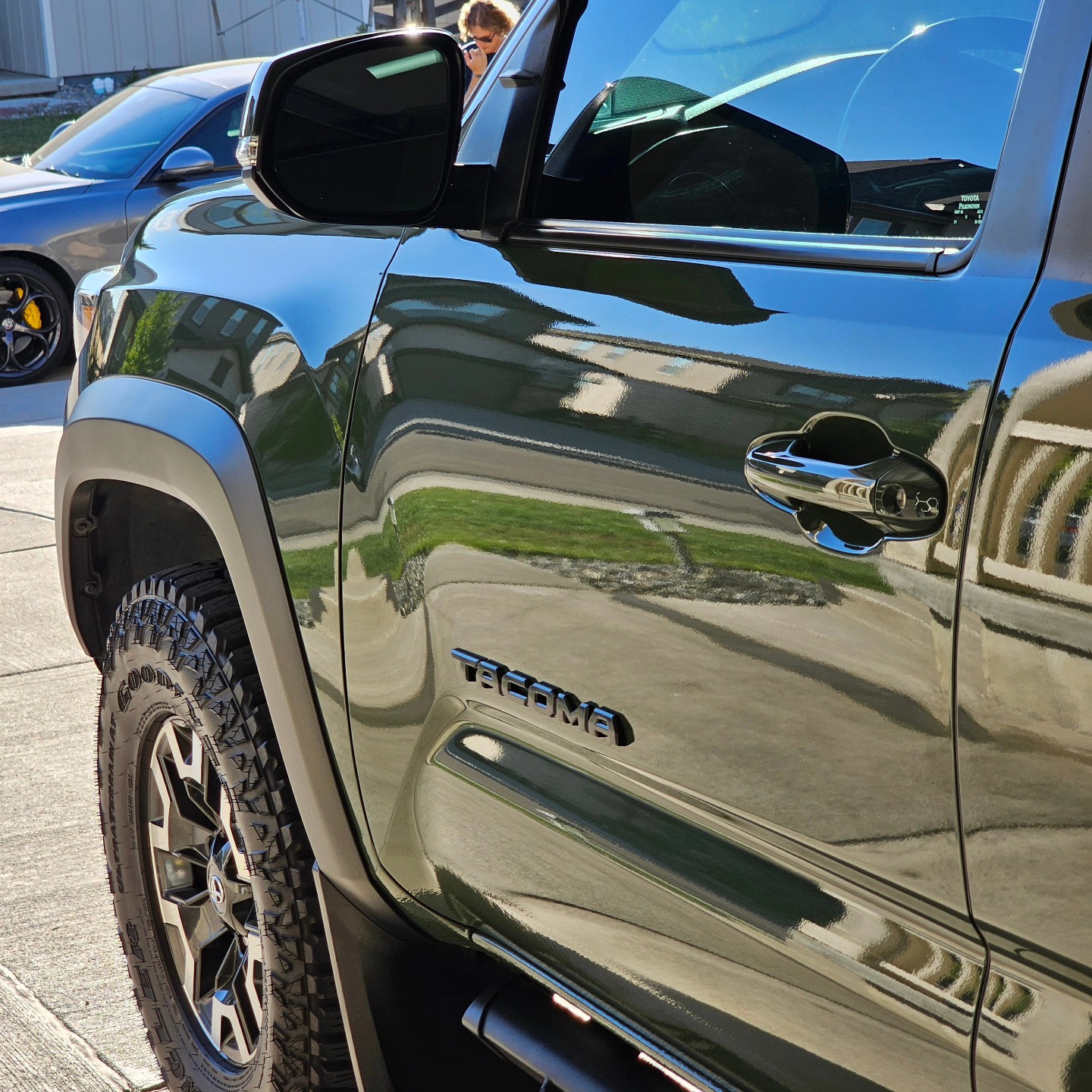
What Is Ceramic Coating?
Ceramic coating is a liquid protective product that chemically bonds with a vehicle’s clear coat to create a durable, transparent layer. Most automotive ceramic coatings use silicon dioxide (SiO2) or related ceramic-based compounds.
Once properly applied and cured, the coating creates a surface that is easier to clean and more resistant to everyday contamination than untreated paint.
One of its most noticeable characteristics is hydrophobic behavior. Water tends to form beads and move away from the surface rather than spreading across the paint.
Main Benefits of Ceramic Coating
Ceramic coatings offer several practical advantages:
- Hydrophobic properties: Water and certain contaminants are less likely to remain on the surface.
- Enhanced gloss: A properly prepared finish can appear deeper and more reflective.
- Easier maintenance: Dirt and road grime generally become easier to remove.
- Chemical resistance: Quality coatings provide some resistance to common environmental and chemical contaminants.
- UV protection: They help reduce the effects of UV exposure on the underlying finish.
It is important to understand that ceramic coating does not make paint completely scratch-proof or eliminate the possibility of water spots. It provides an additional protective layer, not an indestructible shield.
What Is Graphene Coating?
Graphene coating is a newer category of automotive surface protection that incorporates graphene-related materials, often graphene oxide or graphene derivatives, into a coating formulation.
Graphene is a carbon-based material known for its exceptional strength and unique physical properties. In automotive detailing, manufacturers use graphene-related additives to modify certain characteristics of protective coatings.
Depending on the formulation, graphene coatings may offer improved surface slickness, water behavior, chemical resistance, or reduced water spotting.
However, not every product marketed as graphene coating contains the same ingredients or performs identically. The actual formulation matters more than the label.
Main Benefits of Graphene Coating
Commonly promoted advantages include:
- Improved surface slickness: Some formulations create a noticeably smooth finish.
- Water behavior: Many graphene coatings offer strong hydrophobic performance.
- Potentially reduced water spotting: Certain formulations are designed to reduce mineral residue issues.
- Chemical resistance: They can provide protection against various environmental contaminants.
- Gloss enhancement: They can improve the visual appearance of properly prepared paint.
Graphene coatings are not automatically superior to ceramic coatings. Their performance depends on the product’s chemistry, preparation, application, and curing process.
Ceramic Coating vs Graphene Coating: Key Differences
Although both products protect automotive paint, their formulations and performance characteristics can differ.
1. Durability and Longevity
Durability is one of the first things vehicle owners consider.
Ceramic coatings are available in different formulations, with protection periods varying according to product quality, application, maintenance, and environmental exposure.
Graphene coatings are also marketed with extended durability claims. Some formulations may offer advantages in particular conditions, but there is no universal rule that graphene always lasts longer.
For example, a vehicle parked outdoors throughout the year will experience different conditions from a garage-kept vehicle driven occasionally.
The most important consideration is the manufacturer’s verified performance information rather than a broad claim printed on the product label.
2. Hydrophobic Performance
Both coatings are designed to repel water.
Ceramic coatings are well known for producing tight water beads and helping water move off the paint. Graphene coatings can provide similar behavior, although the exact results vary.
An important detail is that strong water beading does not necessarily mean better overall protection.
Some coatings allow water to sheet off instead of forming tight beads. This can also be beneficial because less water may remain on the surface to evaporate and leave mineral deposits.
3. Resistance to Water Spots
Water spots are a common frustration for vehicle owners, especially when washing in direct sunlight or parking near sprinklers.
Some graphene coating formulations are designed to reduce water spotting, potentially offering an advantage in certain conditions.
However, neither coating eliminates the risk entirely. Hard water contains minerals that can leave deposits when droplets dry on the paint.
Insider tip: If you wash your vehicle at home, avoid allowing rinse water to dry naturally on the bodywork. Work in manageable sections, rinse thoroughly, and dry with a clean, high-quality microfiber drying towel. Good washing habits can make a noticeable difference regardless of which coating you choose.
4. Gloss and Appearance
Ceramic coatings are widely appreciated for enhancing paint depth and creating a glossy appearance.
Graphene coatings can also deliver impressive gloss and a smooth finish. However, the visual difference between the two is often less significant than marketing materials suggest.
In practice, paint preparation has a much greater influence on the final appearance.
For instance, applying an expensive coating over paint covered in swirl marks will not make those imperfections disappear. Proper washing, decontamination, and paint correction should come first.
5. Maintenance Requirements
Both coatings make routine vehicle maintenance easier, but neither is maintenance-free.
Owners should still:
- Wash the vehicle regularly using a coating-safe shampoo.
- Avoid abrasive brushes and automatic washes with aggressive cleaning equipment.
- Remove bird droppings and insect remains promptly.
- Use clean microfiber towels.
- Follow the coating manufacturer’s maintenance recommendations.
A common mistake is assuming that a coated vehicle no longer needs careful washing. In reality, improper washing can gradually reduce surface performance and introduce scratches into the clear coat.
Which Coating Is Better for Different Driving Conditions?
The best choice often depends on how and where the vehicle is used.
For Daily Drivers
Ceramic coating is a dependable choice for vehicles that experience regular commuting, highway driving, and routine exposure to road contaminants.
It offers practical paint protection while making regular cleaning easier.
Graphene coating may also be suitable, particularly when the selected formulation provides characteristics that match the owner’s maintenance preferences.
For Vehicles Parked Outdoors
Vehicles exposed to direct sunlight, rain, dust, and changing weather conditions need consistent exterior maintenance.
Both coating types can help protect the finish, but neither replaces regular washing or proper drying.
Graphene products that demonstrate good water-spotting characteristics may be worth considering in areas with frequent rainfall or hard water.
For Enthusiast and Luxury Vehicles
Owners who are particularly concerned about maintaining paint appearance may appreciate either option.
However, the condition of the paint should be evaluated before selecting a coating. A proper detailing and paint correction process can make a greater visual difference than simply choosing between two coating technologies.
For vehicle owners exploring professional surface protection and preparation, this ceramic coating centennial resource offers a useful reference for understanding automotive detailing services and exterior care.
Why Professional Application Matters
Even a high-quality coating can deliver disappointing results when applied incorrectly.
Surface preparation is one of the most important parts of the process. The vehicle should be thoroughly washed, chemically decontaminated, and, when necessary, mechanically decontaminated using appropriate detailing methods.
Paint correction may also be required to remove swirl marks, oxidation, and other imperfections before protection is applied.
During application, detailers must pay attention to:
- Temperature and humidity.
- Surface cleanliness.
- Product application thickness.
- Flashing time and removal.
- Proper curing conditions.
One practical observation from detailing work is that people often focus heavily on the coating brand while overlooking preparation. Yet contamination left beneath the coating can affect the final finish and the quality of the result.
A careful application process is essential regardless of whether the product is ceramic- or graphene-based.
How to Choose Between Ceramic and Graphene Coating
Before making a decision, consider a few practical questions:
- How often do you drive? Daily vehicles may benefit from a coating that is easy to maintain under regular use.
- Where is the vehicle parked? Outdoor exposure increases the importance of consistent cleaning and maintenance.
- What is the current paint condition? Swirl marks and scratches may need correction before coating.
- What does the manufacturer actually guarantee? Compare documented performance claims rather than relying on marketing language.
- Who will apply the coating? Proper preparation and application can significantly influence the outcome.
It is also worth asking whether the product has a clear maintenance process and whether the installer provides guidance on washing and aftercare.
Final Thoughts
When comparing ceramic coating vs graphene coating, there is no universal winner. Ceramic coatings remain a proven option for improving gloss, water repellency, and everyday paint maintenance. Graphene coatings offer an alternative with potentially useful characteristics, particularly in areas such as surface slickness and water-spotting behavior.
The best choice depends on the specific product, the vehicle’s condition, driving environment, and maintenance habits.
Rather than choosing a coating based solely on its name or advertised lifespan, focus on product quality, proper preparation, and professional application. A well-maintained ceramic coating can outperform a poorly applied graphene coating, and the reverse can also be true.
Ultimately, the goal is not simply to make a vehicle shine on the day the coating is installed. It is to maintain a cleaner, better-protected finish over time. Understanding the differences between these two options makes it easier to choose a solution that genuinely suits your vehicle and your expectations.
Also read for more information so click here.