

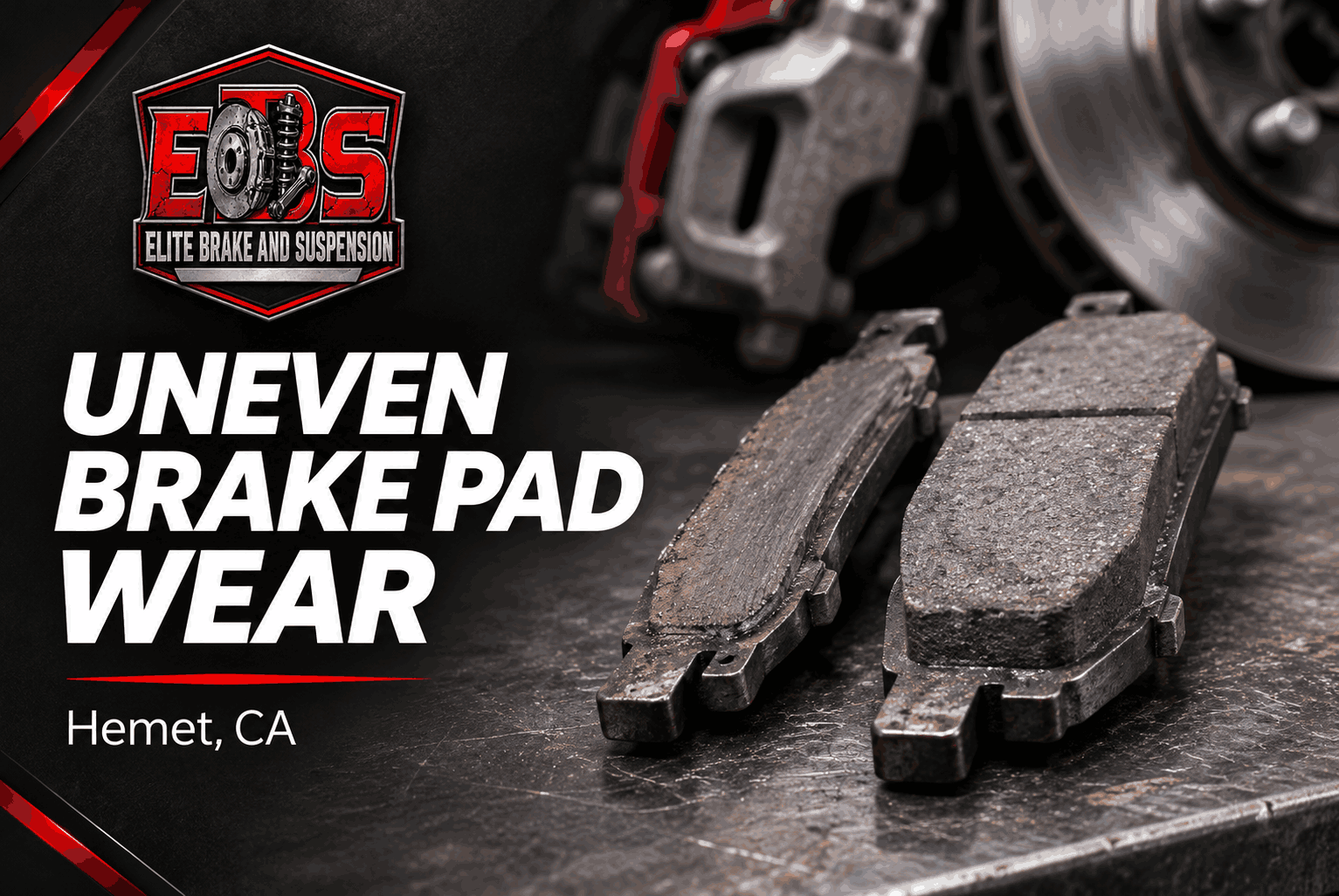
You take your car in for a routine inspection and learn that one brake pad is nearly worn out while the others still have usable material. Maybe the pads were replaced together, or maybe the one you could see through the wheel looked fine. Finding brake service in Hemet, CA gives you a chance to answer the question that matters before you pay for another set: what made that pad wear faster in the first place?
The answer starts with where the wear occurred. A thinner inner pad, a worn pad on one side of the car, and a pad that is thicker at one end all give the technician different clues. The wear pattern helps narrow the inspection and gives you a more specific question to ask when the estimate comes back.
What Counts as Uneven Brake Pad Wear?
Front and rear pads can wear at different rates because the two axles can handle different amounts of braking work. A more revealing comparison is between the inner and outer pads at a single wheel and between the left and right wheels on the same axle. If the front passenger side has significantly less pad material than the driver side, ask what the technician found at that wheel.
A visual check through the wheel may show only the outer pad. That pad can look fine while the inner pad, which sits behind the rotor, is considerably thinner. Ask for the measurements of both pads and which wheel they came from. A note that simply says “front pads low” leaves out the detail that could explain why the pads need attention.
When One Edge Is Thinner Than the Other
Sometimes the difference is visible on a single pad. One end has more material remaining than the other, giving the pad a tapered shape. The technician can compare that pattern with the intended pad design and check how the pad fits in its bracket. If there is abnormal taper, it can guide checks of the caliper slides and mounting hardware.
A photo can make this easier to understand. Ask the shop to point out the thin edge and show you how the corresponding pad on the same wheel looks. That comparison helps connect the wear pattern to the proposed work.
How a Sticking Caliper Can Shorten Pad Life
When you press the brake pedal, the caliper presses the pads against the rotor. In a floating caliper design, guide pins let the caliper slide so both pads can clamp the rotor. If a pin binds or the piston sticks, the pads may apply or release unevenly. A pad that continues rubbing after you release the pedal can wear faster and create excess heat.
The thickness difference gives the technician a place to start. A shop may check how freely the caliper slides, whether the pads can move in their bracket, and whether the piston operates as expected. If a caliper is included in the estimate, ask what the inspection confirmed and whether the problem was with the piston, guide pins, or another part of the assembly.
Why the Pad Hardware Deserves a Look
The clips and contact points that hold the pads in place can affect how freely they move. Corrosion around the bracket or problems with the hardware can cause a pad to bind. If you had new brakes fitted recently and one pad is already wearing faster, bring the previous invoice so the technician can see which parts were replaced and which were reused.
When arranging a brake system inspection, mention whether the issue appeared soon after the last service or developed gradually. A timeline can help the technician connect the current wear pattern with the work already done.
What the Rotor Can Tell You About the Wear
The rotor is the surface the pads press against. A groove, a pronounced lip at the edge, or wear across only part of the pad face can help the technician understand how the two surfaces have been contacting each other. If one wheel has been running hotter because a brake is dragging, the shop can also check the rotor for signs of heat damage.
If the estimate includes brake pad and rotor replacement, ask for the rotor measurements and an explanation of its condition. The shop should be able to tell you whether the recommendation comes from a thickness measurement, surface damage, or another inspection finding. If the estimate also includes caliper or hardware work, ask which item addresses the cause of the uneven wear and which items address the damage it left behind.
How to Describe the Problem Before Your Appointment
Details from everyday driving can help a technician reproduce a complaint. You may notice a squeal as you leave a parking space, a pull when you slow for a stop, or a rubbing sound that continues after you lift your foot off the pedal. Explain where the sound seems to come from, when it starts, and whether it changes as you brake.
If the wear was discovered during a routine service and the car feels normal, ask what prompted the finding. The technician may have measured a thin inner pad or noticed a difference between wheels while checking the brakes. That initial observation gives you a reference point for discussing the diagnosis and comparing it with the previous inspection, if you have one.
What to Ask Before Approving Another Set of Pads
Start with the measurement. Ask how much material is left on the thinnest pad, where it sits, and how it compares with the matching pad on the opposite wheel. Then ask what the technician found when checking how the pads and caliper move. For example, a shop might show you that the inner pad at the right front wheel wore down faster and explain that a guide pin was binding at that corner. That explanation connects the location, the wear, and the recommended repair.
Review the estimate with that finding in mind. Ask whether it covers pads across the axle, hardware, rotor work, or a caliper. Each item should have a reason you can follow. A quote that covers a worn set of pads and a binding component is easier to understand when the shop explains which parts need replacement and which can be serviced.
At pickup, keep the invoice with your maintenance records and ask whether it includes the original findings. If the same corner shows unusual wear at a later inspection, the record gives the technician something concrete to compare. It can also help you remember which components were replaced the next time you’re planning brake service in Hemet.