


Parcels don’t travel the way we picture them. They’re stacked, squeezed against a van door and, occasionally, left in the rain on a doorstep. Most damage isn’t bad luck. It’s a mismatch between the item and what’s wrapped around it. The right packaging materials are the ones that suit an item’s weight, shape and weak points, not simply the thickest or priciest option.
This guide covers what actually harms a parcel, how to match protection to the contents, and when adding more makes things worse.
What are the main factors that can damage a parcel during its journey?
Four things do most of the harm: crushing from stacked weight, drops and knocks, moisture, and sharp points that puncture the outer layer. Vibration adds to the problem over long distances. Protecting a parcel means identifying which of these threats your particular item faces, then choosing a defence for that threat specifically.
Crushing and drops
Crushing is the quiet culprit. A parcel at the bottom of a roll cage carries the weight of everything stacked above it, so the outer layer has to keep its shape when it’s leaned on. Drops look more dramatic, yet they’re usually survivable if the contents can’t slide about and hit the walls.
Moisture and punctures
British weather does plenty of the damage. A parcel left on a doorstep in Manchester can sit through an afternoon downpour, and plain cardboard softens fast once it’s wet.
Punctures tend to come from the item itself, such as a corner, a buckle or a table leg poking through thin material. Check what’s sharp before you choose the wrap. If you’re sending items that are sensitive to moisture, like paper goods or electronics, using a sealed bag inside the box provides an inexpensive additional layer of protection.
Vibration and shifting
Long journeys, mean hours of rattling. Anything loose inside will rub, scuff and creep towards a corner. Space is the real enemy here, and a snug fit deals with it better than almost anything else. Loose fillers such as scrunched paper also settle during a journey, so pack them firmer than necessary.
Which protection suits which kind of item?
Match the defence to the item’s weakness. Fragile things need cushioning inside a rigid box, soft goods need a clean, water-resistant wrap, and flat items need stiffness so they can’t bend. Heavy items need strong box walls and a tight fit. Choosing by item type beats choosing by price every time.
The best packaging materials for a ceramic mug aren’t the best for a knitted jumper, and that’s the whole point. Think of it as three separate jobs: cushioning, containing and shielding. Most items require one of these tasks to bear the weight.
Fragile items: cushion first, then contain
Wrap each piece separately in bubble wrap or paper, then place it in a sturdy box with void fill around every side. A corrugated card is a board made of a wavy, fluted layer sandwiched between flat liners, and the flutes behave like tiny springs. A double wall board has two fluted layers, which suits heavier or more delicate contents.
A common error is wrapping the item beautifully and leaving a gap underneath, so it drops through the cushioning on the first knock. Decent packaging supplies on the shelf, such as tape, bubble wrap and a few box sizes, make the sizing job far easier.
Soft goods: keep them clean and dry.
A postal bag is a lightweight, water-resistant option for clothes, bedding, soft toys and anything else that squashes without harm. It keeps the rain out, adds almost no weight and takes up little room in a van. It won’t stop a crush, though, and it’s the wrong choice for anything with hard edges or a shape that needs to survive.
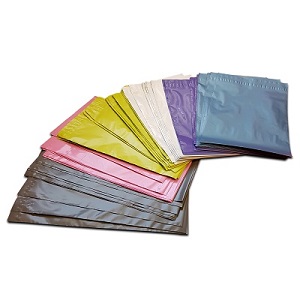
Fold items flat, press out the air, and size up if the seam looks strained. A knitted jumper going to a student in Leeds is ideal. A glass candle isn’t.
Flat items: stop them bending
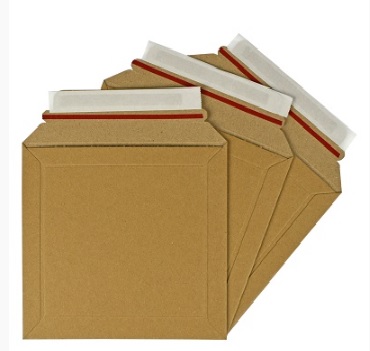
Cardboard envelopes are stiff enough to stop prints, photographs, certificates and thin books folding in transit. They’re the sensible pick when a bag would crumple the contents and a box would waste space.
Their weakness is water and corners. Slip a clear sleeve inside for anything precious, and keep bulky or heavy contents well away from them. If a flat item is irreplaceable, a thin box may still be the better choice.
How do you choose between a bag, an envelope and a box?
Choose by shape and fragility. Soft, bendable items go in a bag. Flat items that mustn’t fold go in a stiff envelope. Anything with hard edges, real weight or breakable parts goes in a box. When an item suits two options, pick the more protective one, because a small saving now can cost a refund later.
A quick decision path
Ask these questions in order, and stop as soon as you get a “yes” answer:
- Would bending ruin it? Use a stiff envelope, or a box if it’s valuable.
- Would squashing ruin it? Use a box.
- Does it have a hard edge or a breakable part? Use a box with cushioning.
- Is it heavier than it looks? Weigh it before you trust any envelope.
- None of the above? A bag will do nicely.
Where each option has its limitations
Every format has a weakness, and pretending otherwise is how parcels get damaged. A postal bag gives almost no protection against crushing. Cardboard envelopes don’t cope well with soaking and can split at the seams when overfilled.
Boxes are the strongest all-rounders, but they add weight and bulk. A half-empty box also invites rattling.
Sizing and fit
Good parcel packaging is sized to the item, not to whatever’s left in the cupboard. Leave enough room for cushioning on fragile goods and almost none for soft ones. Picture a mug wrapped in bubble wrap. A box only a few centimetres wider on each side holds it snugly, whereas one twice the size lets it travel like a die in a cup.
Does more padding always make a parcel safer?
No. Extra padding can make a parcel heavier and bulkier, and it often hides a loose fit rather than fixing it. A snug, well-matched fit with the right layer for each risk usually protects better than a box stuffed with filler. More isn’t automatically safer; better matched is.
A modest stock of packaging supplies, used with care, beats a cupboard full of extras. Reusing boxes is fine too, with limits. A box that’s been dented, soaked or flattened and re-erected has lost much of its strength, so keep it for light items or retire it.
Summing up
Durability isn’t about buying the toughest thing on the shelf. It’s about naming the threat, whether that’s crushing, water, punctures or movement, and picking the layer that answers it. Soft goods suit a bag, flat things suit a stiff card, and anything fragile or heavy belongs in a box with a snug fit.
Choosing packaging materials this way saves money, cuts down on damage and spares the recipient a disappointing unboxing. Keeping a small, sensible set of packaging supplies at home makes the routine quicker. Pack according to the actual journey the parcel will take, and it will typically arrive intact.