

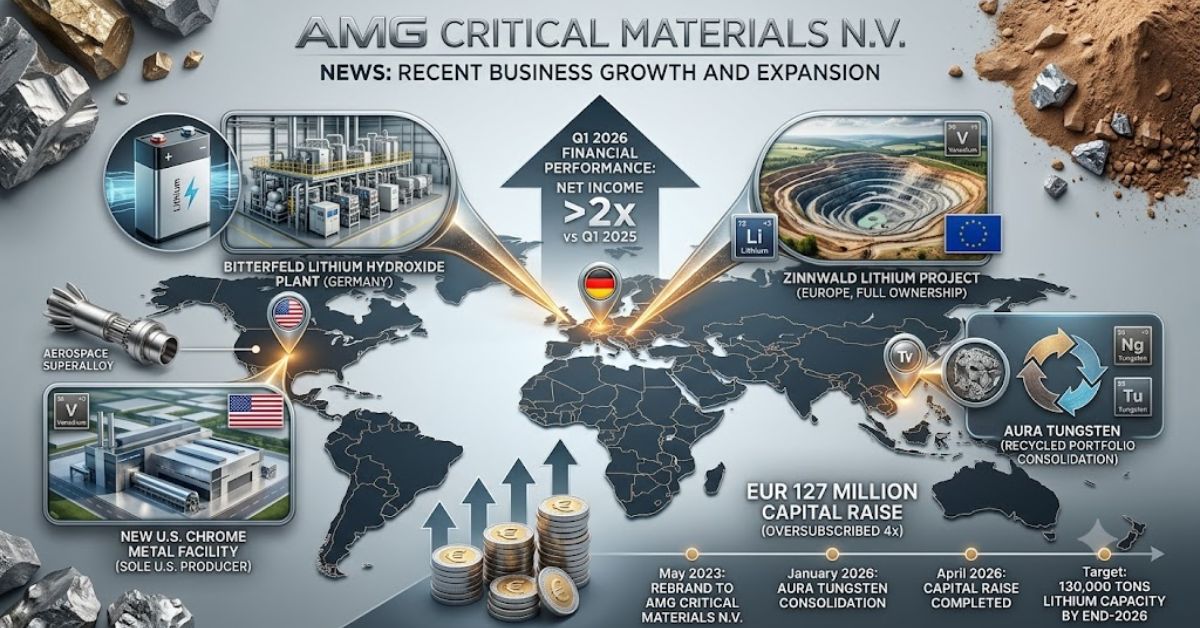
Anyone following Advanced Metallurgical Group news in 2026 has seen a company shifting into a higher gear. Once known simply as AMG, the business now operates as AMG Critical Materials N.V., and its recent results show accelerating growth across lithium, vanadium, and specialty metals. This article breaks down exactly what’s driving that momentum and why it matters.
From a major capital raise to new facility openings and a strategic acquisition, Advanced Metallurgical Group has been making headlines for good reason. Below, we unpack the numbers, the deals, and the bigger industry trends shaping this expansion.
Who Is Advanced Metallurgical Group?
AMG was founded and taken public through an IPO in 2007. It is headquartered in Amsterdam, the Netherlands, and employs roughly 3,309 full-time staff worldwide.
In May 2023, the company rebranded from AMG Advanced Metallurgical Group N.V. to AMG Critical Materials N.V. This name change reflected a sharper strategic focus on materials considered essential to the global energy transition.
The company now organizes its business into two core areas:
- Critical Materials — specialty metals, alloys, lithium, vanadium, and related products
- Engineering — vacuum furnace systems and heat treatment services for industrial clients
Within Critical Materials, AMG further breaks its operations into three key segments:
- AMG Lithium
- AMG Vanadium
- AMG Technologies
This structure positions the company at the center of supply chains for batteries, aerospace alloys, and industrial decarbonization technologies.
Strong Q1 2026 Financial Performance
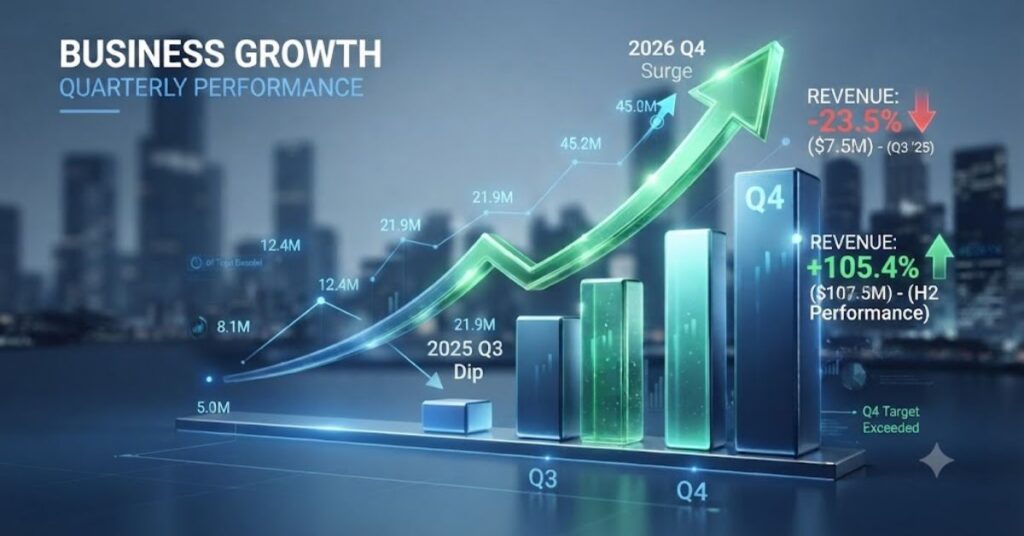
The most significant piece of recent Advanced Metallurgical Group news came with the release of its Q1 2026 earnings. The results showed clear signs of accelerating growth, even amid a challenging pricing environment for some materials.
Key highlights from the quarter include:
- Adjusted EBITDA of EUR 44 million, up 2% from EUR 43 million in Q4 2025
- Net income of $12 million, more than double the $5 million reported in Q1 2025
- AMG Lithium revenue up 89% year-over-year
- Full-year 2026 adjusted EBITDA guidance set between EUR 210 million and EUR 240 million
Management described Q1 as the expected low point for the year. They anticipate stronger results in subsequent quarters as pricing improvements and new production capacity begin contributing more fully.
What Drove the Lithium Surge
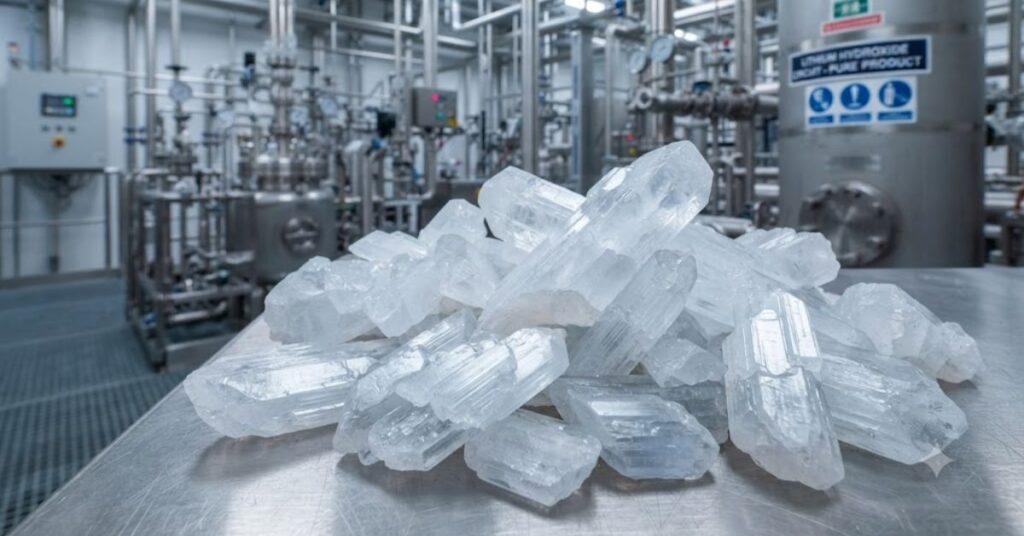
The sharp jump in lithium revenue wasn’t accidental. It was tied directly to the startup of AMG’s Bitterfeld production plant in Germany.
This facility began selling battery-grade lithium hydroxide during the quarter. Combined with higher spodumene volumes and improving lithium and tantalum prices, it pushed segment revenue up dramatically.
Executives noted that shipping vessel availability had actually held back some sales in Q1. Those delayed shipments were expected to convert into revenue during the following quarter instead.
A Major Capital Raise to Fund Expansion
On April 9, 2026, AMG completed a capital increase equal to 10% of its existing share base. Shares were placed at EUR 34 per share, raising total proceeds of EUR 127 million.
Notably, the offering was oversubscribed four times over. That level of investor demand signals strong market confidence in AMG’s growth strategy.
The company has stated the funds will be directed toward three priority areas:
- Lithium capacity expansion
- High-purity molybdenum production
- Vanadium processing growth
This capital injection strengthens AMG’s balance sheet while giving it the flexibility to accelerate multiple expansion projects simultaneously, rather than sequencing them one at a time.
Strategic Acquisition: Zinnwald Lithium
Among the most talked-about pieces of Advanced Metallurgical Group news this year is the Zinnwald Lithium acquisition. AMG announced it would acquire the remaining 71% stake in Zinnwald Lithium for approximately $56 million.
This deal gives AMG full ownership of a lithium project situated in the heart of Europe. Company leadership framed the move as adding “optionality” to its critical materials portfolio, meaning greater flexibility in how it sources and processes lithium going forward.
Why does this matter for the broader industry? European-based lithium supply reduces reliance on distant, geopolitically sensitive supply chains. That’s an increasingly important consideration for automakers and battery manufacturers operating in the EU.
New Facility Openings Signal Real Expansion
Financial results tell part of the story, but physical infrastructure tells the rest. AMG has been actively opening new production facilities throughout 2026, turning strategic plans into operational reality.
Chrome Metal Facility in the United States
In June 2026, AMG opened a new chrome metal facility in the United States. This move made AMG the sole U.S. producer of chrome metal, a materially significant milestone.
Chrome metal is used across aerospace superalloys, specialty steel, and various high-performance industrial applications. Domestic U.S. production reduces reliance on foreign chrome supply chains, which matters for both commercial buyers and national supply security.
AURA Consolidation
Beginning January 1, 2026, AMG consolidated its AURA business into its financial reporting. AURA brought recycled tungsten into AMG’s critical materials portfolio, expanding beyond its existing circular molybdenum operations.
Favorable tungsten pricing during the quarter helped boost AURA’s contribution to overall results. This consolidation also positions AMG as a stronger platform for future growth in high-purity molybdenum recycling and processing.
Lithium Capacity Expansion Targets
AMG has set a clear target: expanding lithium production capacity to 130,000 tons by the end of 2026. This target reflects the scale of the company’s ambitions in the battery materials space.
The company has already secured funding to support this expansion. Combined with the Bitterfeld plant’s successful startup, this puts AMG on a credible path toward that year-end capacity goal.
Why Critical Materials Are Suddenly Center Stage
Understanding Advanced Metallurgical Group news requires understanding the broader materials landscape it operates within. Lithium, vanadium, and graphite have shifted from niche commodities to strategically vital resources.
Several converging trends explain this shift:
- Electric vehicle demand continues driving lithium and battery material consumption higher
- Grid-scale energy storage projects increasingly rely on vanadium-based technologies
- Aerospace and defense sectors need reliable domestic supplies of chrome, molybdenum, and tungsten
- National industrial policies in the U.S. and Europe are prioritizing critical mineral independence
AMG’s diversified portfolio across these materials distinguishes it from bulk commodity producers. Its fortunes are less tied to construction cycles and more connected to long-term electrification and decarbonization trends.
Risks and Challenges Facing AMG
No growth story is without risk, and AMG’s leadership has been candid about the challenges ahead. Investors and industry watchers should keep several factors in mind.
Key risks highlighted by management include:
- Shipping and logistics delays that can push revenue recognition into later quarters
- Vanadium feedstock volatility, particularly tied to disruptions in Middle East supply routes
- Cyclical pricing pressure across lithium and vanadium markets
- Execution risk on multiple simultaneous expansion projects
Despite these headwinds, AMG’s 2025 performance ranked as the third-highest adjusted EBITDA result in company history. That track record suggests a business capable of managing volatility while still delivering growth.
What This Means for Investors and Industry Watchers
The combination of a major capital raise, a strategic acquisition, new facility openings, and strong quarterly earnings paints a consistent picture. AMG is not simply reacting to market conditions — it’s proactively positioning itself ahead of expected demand growth.
For investors, the oversubscribed capital raise is a particularly telling signal. Four-times oversubscription suggests institutional confidence extends well beyond AMG’s own management team.
For industry observers, the U.S. chrome facility and European lithium acquisition both point toward a broader trend. Critical materials companies are increasingly building regional, diversified supply chains rather than relying on single-source dependencies.
Frequently Asked Questions
Is AMG still called “Advanced Metallurgical Group”?
Officially, the company changed its name to AMG Critical Materials N.V. in May 2023. However, many investors and news outlets still refer to it by its original name when discussing Advanced Metallurgical Group news.
What are AMG’s main products?
AMG produces lithium, vanadium, chrome metal, molybdenum, tungsten, and various specialty alloys. It also operates an Engineering segment focused on vacuum furnace systems.
Where does AMG operate?
The company has production facilities across Germany, the United Kingdom, France, the United States, China, Mexico, Brazil, India, and Sri Lanka, with additional sales offices in Japan.
Conclusion
The latest Advanced Metallurgical Group news tells a clear story of deliberate, well-funded expansion. Between the EUR 127 million capital raise, the Zinnwald Lithium acquisition, and new facility openings in both Europe and the United States, AMG is building real infrastructure behind its growth ambitions.
Q1 2026 results confirmed that this strategy is already translating into measurable financial gains, even with normal industry headwinds in play. As lithium, vanadium, and chrome demand continues climbing alongside global electrification efforts, AMG appears well-positioned to remain a company worth watching throughout the rest of 2026 and beyond.