

Bright blooms depend on more than sunshine and water. The nutrients available in the soil influence how many buds form, how strong the stems grow, and how long flowers last. This guide explains how to choose and use fertilizer for flowering plants, from reading the label to timing the feed.
Why Flowers Need Feeding
Plants take nutrients from soil, and repeated flowering uses a great deal of energy. Garden soil may lack some nutrients, and potted plants run out quickly because the volume of soil is small. Feeding replaces what the plant uses and supports steady growth.
A good fertilizer for flowering plants supports roots, leaves, and blooms in balance. Too little limits flowering. Too much, especially of nitrogen, can produce lush leaves with few flowers.
Understanding NPK
Reading the label is the first skill in choosing fertilizer for flowering plants.
Every fertilizer label shows three numbers. They stand for nitrogen, phosphorus, and potassium.
- Nitrogen (N): supports leaf and stem growth
- Phosphorus (P): supports roots, flower buds, and energy transfer
- Potassium (K): supports overall vigor, stem strength, and disease resistance
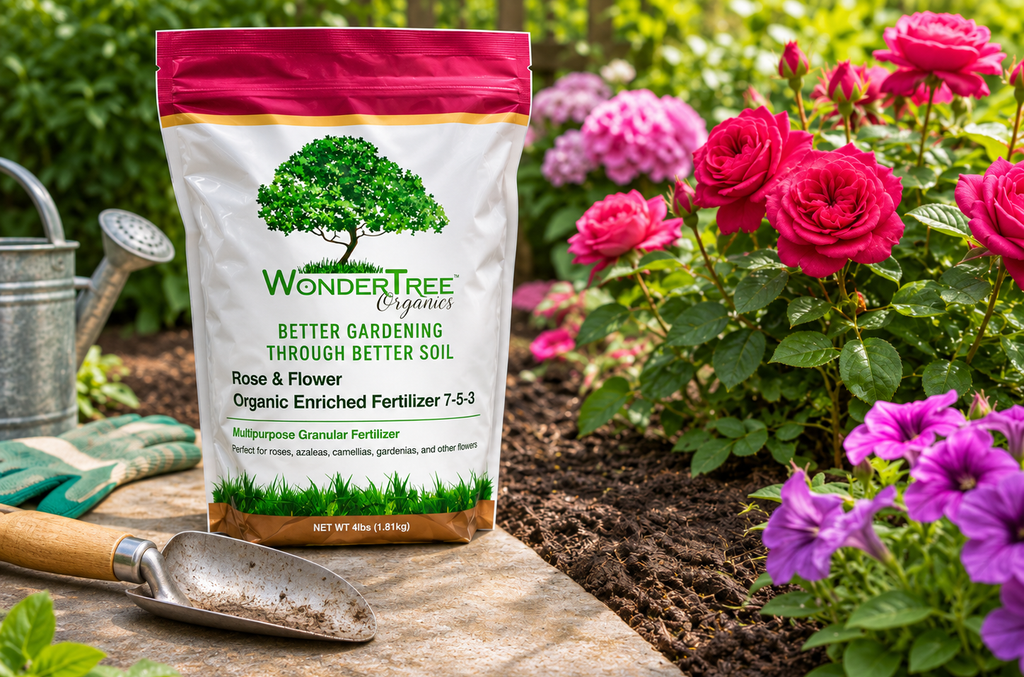
A 7-5-3 blend, for example, contains 7% nitrogen, 5% phosphate, and 3% potassium. It leans toward steady vegetative growth while still giving flowers the phosphorus and potassium they need.
Match the Ratio to the Stage
Stage matters when feeding with fertilizer for flowering plants.
Different stages call for different balances.
- Early growth: a balanced or slightly nitrogen-rich feed builds leaves and canes
- Before bloom: more phosphorus helps buds form
- During bloom: potassium supports flower quality and stem strength
- Late season: reduce feeding as the plant prepares to rest
There is no single best ratio for every plant. Many flowering plants do well with a balanced feed during growth, followed by relatively more phosphorus and potassium as flowers appear.
Organic and Synthetic Options
Organic Fertilizers
Organic products release nutrients as soil microbes break them down. They improve soil structure and feed beneficial organisms. Examples include compost, bone meal, fish emulsion, and neem-based blends.
Synthetic Fertilizers
Synthetic products provide nutrients quickly in measured amounts. They work well for fast corrections but do little to build the soil. They can burn plants if over-applied.
Many gardeners combine approaches: organic matter as a base, with extra feeding where needed. A slow-release organic fertilizer for flowering plants gives gentle, steady nutrition and lowers the risk of burning.
Granular, Liquid, or Slow-Release
- Granular: mixed into soil or scattered around plants, then watered in
- Liquid: diluted in water and applied regularly, popular for containers
- Slow-release: feeds gradually over weeks or months
Slow-release granules reduce leaching and how often you need to reapply. Liquids give quick results and suit potted plants.
How to Apply
Careful application makes fertilizer for flowering plants safer and more effective.
- Read the label and follow the stated rate
- Water the soil first if it is dry
- Scatter granules evenly around the plant, away from the stem
- Work them into the top inch of soil
- Water thoroughly afterward
- Mulch to retain moisture
Never pile fertilizer against stems or crowns. For roses, spread granules in a band from about six inches out from the crown to eighteen inches. More is not better, because over-application wastes product and can harm plants and soil life.
Timing for Common Flowers
- Roses: feed in early spring as growth starts, again after the first flush, and for repeat bloomers in midsummer
- Perennials: feed in spring as new growth emerges
- Annuals and containers: feed regularly during the growing season
- Flowering shrubs: feed in spring, and avoid late-season nitrogen
- Bulbs: feed after flowering to build next year’s bloom
Signs of Too Little or Too Much
Too Little
- Pale or yellowing leaves
- Slow growth
- Few or small flowers
- Weak stems
Too Much
- Dark, lush leaves with few flowers
- Burned leaf edges
- White crust on the soil surface
- Wilting despite moist soil
If you suspect over-feeding, water deeply to flush excess nutrients, and skip the next application.
Soil Matters Too
Fertilizer works best in healthy soil. Compost improves structure, drainage, and microbial life. A soil test shows pH and nutrient levels, which helps you choose the right product and avoid wasting money.
Conclusion
Strong blooms come from the right ratio, the right timing, and healthy soil. Gardeners who grow vegetables alongside flowers can also look for an organic fertilizer for leafy greens, which leans heavier on nitrogen for lush leaves. Feed carefully, water well, and enjoy the flowers.