

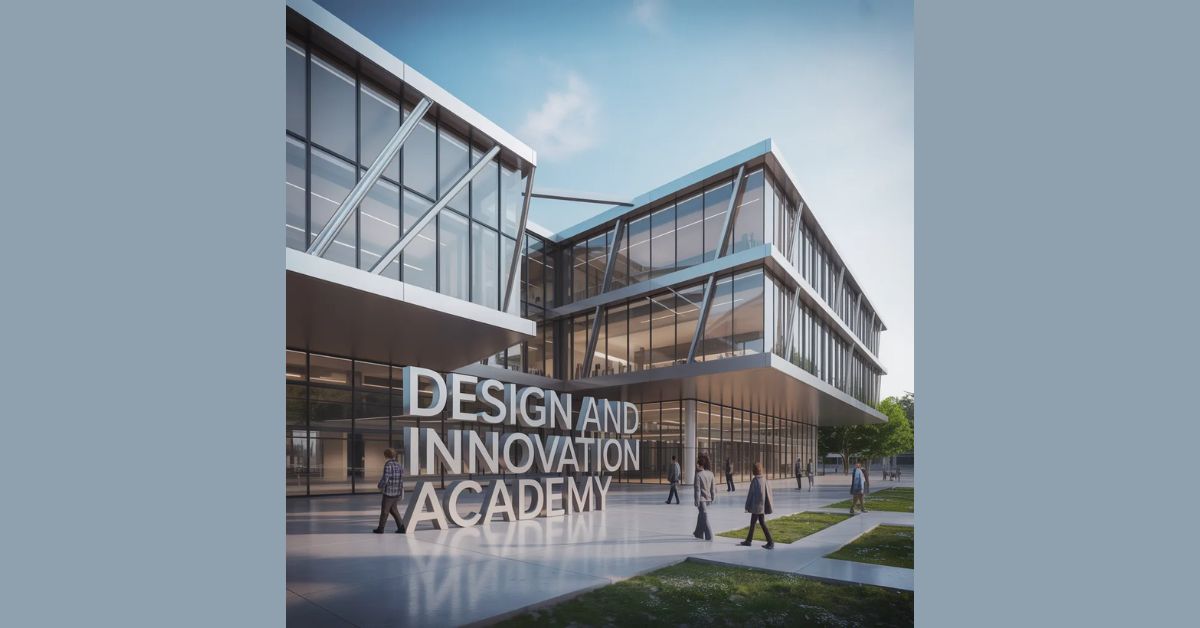
Imagine a classroom where a student sketches an idea on paper in the morning and transforms it into a functioning digital prototype by the afternoon. This is not a distant vision of education — it is the daily reality at a Design and Innovation Academy. In a world where the World Economic Forum estimates that 65 percent of children entering primary school today will work in jobs that do not yet exist, the need for institutions that nurture both creative thinking and technological fluency has never been more urgent. A Design and Innovation Academy stands at the precise intersection of imagination and execution, equipping learners with the mindset, methods, and tools to thrive in an unpredictable future.
This article explores what makes a Design and Innovation Academy uniquely powerful, how it merges creative disciplines with cutting-edge technology, what pedagogical frameworks drive its success, and why it represents one of the most important educational movements of the twenty-first century.
The Philosophy Behind Design and Innovation Education
At its core, a Design and Innovation Academy operates on a deceptively simple belief: the most meaningful solutions are born when artistic sensibility meets analytical rigor. Traditional education systems have long separated the arts from the sciences, treating them as opposing disciplines. The Design and Innovation Academy dismantles this divide entirely. It positions design thinking — a human-centered problem-solving methodology developed at institutions like Stanford’s d.school — as the connective tissue between creativity and technology.
Design thinking teaches students to empathize deeply with users, define problems with precision, ideate boldly without judgment, prototype rapidly, and test iteratively. This five-stage process is not just a framework for product development; it is a way of engaging with the world. Students at a Design and Innovation Academy learn to see ambiguity as an opportunity rather than an obstacle, and failure as a critical data point on the path to success. According to IDEO, one of the world’s leading design consultancies, organizations that embed design thinking report innovation success rates up to 50 percent higher than those that do not.
Technology as the Canvas for Creative Expression
Technology at a Design and Innovation Academy is never treated as an end in itself. It is the canvas upon which creative ideas are painted. Students engage with a rich ecosystem of tools including 3D printing, laser cutting, augmented reality, virtual reality, artificial intelligence, and advanced coding platforms. What distinguishes this academy model is that these technologies are introduced in service of a creative challenge rather than as isolated technical skills to be mastered in a vacuum.
A student designing an accessible product for elderly users, for instance, might begin by sketching concepts, then move into CAD software to model a three-dimensional prototype, then use a 3D printer to produce a physical version for testing. The technology serves the human story at the center of the project. This integration mirrors how the most innovative companies in the world — from Apple to Tesla to Airbnb — actually operate, blending design culture with technical capability to produce transformative products and experiences.
The global 3D printing market is projected to reach 83.9 billion dollars by 2029, according to Markets and Markets research, underscoring how profoundly fabrication technologies are reshaping industries. Students trained in these tools at a Design and Innovation Academy enter the workforce already fluent in the language of modern manufacturing and digital production.
A Curriculum Built Around Real-World Challenges
One of the most distinguishing features of a Design and Innovation Academy is its commitment to project-based, challenge-driven learning. Rather than teaching concepts in isolation, the academy anchors every lesson in a real-world problem that demands both creative and technological solutions. Students might spend a semester designing a sustainable urban garden for their community, developing a mobile app for mental health support, or engineering a low-cost water filtration system for underserved regions.
This approach produces what researchers call “deep learning” — the kind of durable, transferable understanding that outlasts a standardized test. A 2019 study published in the Journal of Educational Psychology found that students engaged in project-based learning demonstrated significantly higher retention of knowledge, stronger collaboration skills, and greater intrinsic motivation compared to those in traditional instructional environments. The Design and Innovation Academy harnesses this power deliberately, structuring its curriculum so that every project demands students synthesize knowledge across disciplines and apply it to something that genuinely matters.
Faculty as Mentors, Practitioners, and Creative Collaborators
The educators at a Design and Innovation Academy occupy a fundamentally different role than the traditional teacher standing at a whiteboard. They are mentors, practitioners, and creative collaborators who bring real-world experience into the learning environment. Many faculty members at leading design and innovation academies hold dual identities — they may be practicing architects, software engineers, UX designers, or social entrepreneurs who also teach. This proximity to industry ensures that the curriculum remains relevant, dynamic, and grounded in actual professional practice.
This mentor model reflects research on expert learning. A landmark study by cognitive scientist Anders Ericsson demonstrated that deliberate practice guided by an experienced mentor accelerates skill development far more effectively than self-directed study alone. At the Design and Innovation Academy, students benefit from ongoing mentorship not just from their primary teachers but often from visiting professionals, industry partners, and alumni who return to share their journeys. This creates a living ecosystem of knowledge, feedback, and inspiration.
Fostering an Entrepreneurial and Innovation Mindset
Beyond technical skills and creative methods, a Design and Innovation Academy is fundamentally in the business of mindset formation. The academy cultivates what Stanford psychologist Carol Dweck calls a “growth mindset” — the belief that intelligence and ability are not fixed traits but capacities that expand through effort, learning, and resilience. This mindset is the foundation of entrepreneurial thinking, and it is woven into every aspect of academy life.
Students are encouraged to pitch ideas, receive critical feedback, revise their work, and iterate without shame. They learn to communicate their creative vision persuasively, to build and lead teams, and to navigate the messy, nonlinear reality of bringing an idea from concept to completion. According to the Kauffman Foundation, entrepreneurial education that begins before the age of eighteen significantly increases the likelihood that young people will launch businesses, pursue innovation careers, and develop the adaptability necessary to succeed in volatile job markets. The Design and Innovation Academy plants these seeds early and tends them carefully.
The Role of Collaboration and Diversity in Creative Innovation
Innovation rarely happens in isolation. It emerges from the collision of different perspectives, lived experiences, and areas of expertise. The Design and Innovation Academy is built on this conviction, deliberately constructing learning environments that bring together students with different cultural backgrounds, academic strengths, and personal interests. A team designing a public health campaign might include a student who excels in visual storytelling, another with deep coding skills, a third with strong research abilities, and a fourth who brings firsthand community knowledge.
Research from McKinsey and Company consistently shows that companies with diverse teams outperform homogeneous ones on innovation metrics. A 2020 report found that organizations in the top quartile for diversity were 36 percent more likely to achieve above-average profitability. The Design and Innovation Academy prepares students to not only work in diverse environments but to actively seek out and leverage the creative power of difference. This is not a soft skill — it is a core competency for the innovation economy.
Preparing Students for the Future of Work and Creative Industries
The world of work is being reshaped by automation, artificial intelligence, and digital transformation at a pace that challenges even the most forward-thinking educators. A 2023 report by McKinsey Global Institute estimated that up to 30 percent of current work tasks across the global economy could be automated by 2030. In this landscape, the skills that most resist automation — creativity, empathy, complex problem-solving, and cross-disciplinary synthesis — are precisely the skills a Design and Innovation Academy develops with intention.
Graduates of design and innovation programs are finding pathways into careers across technology, healthcare, sustainable development, entertainment, finance, and public policy. They bring with them a rare combination of creative fluency and technical literacy that makes them invaluable in organizations navigating digital transformation. Companies including Google, IDEO, Nike, and Patagonia have explicitly sought graduates with design thinking and innovation skills, recognizing that these capabilities drive the kind of transformative product and strategy development that sustains long-term competitive advantage.
A Model for the Future of Education
The Design and Innovation Academy is not simply a school — it is a statement about what education can and should be. It represents a deliberate rejection of the factory model of schooling that has dominated education systems for more than a century, and an embrace of a more human, more dynamic, and more relevant approach to preparing young people for the world they will actually inhabit. As cities, corporations, and governments increasingly recognize that creativity and innovation are the twin engines of economic and social progress, the Design and Innovation Academy stands as a model worth scaling, studying, and celebrating.
The future belongs to those who can imagine it and then build it. A Design and Innovation Academy does exactly that — it gives young people the tools, the confidence, and the community to turn their most ambitious visions into reality. In doing so, it does not just change individual lives. It changes the world.