

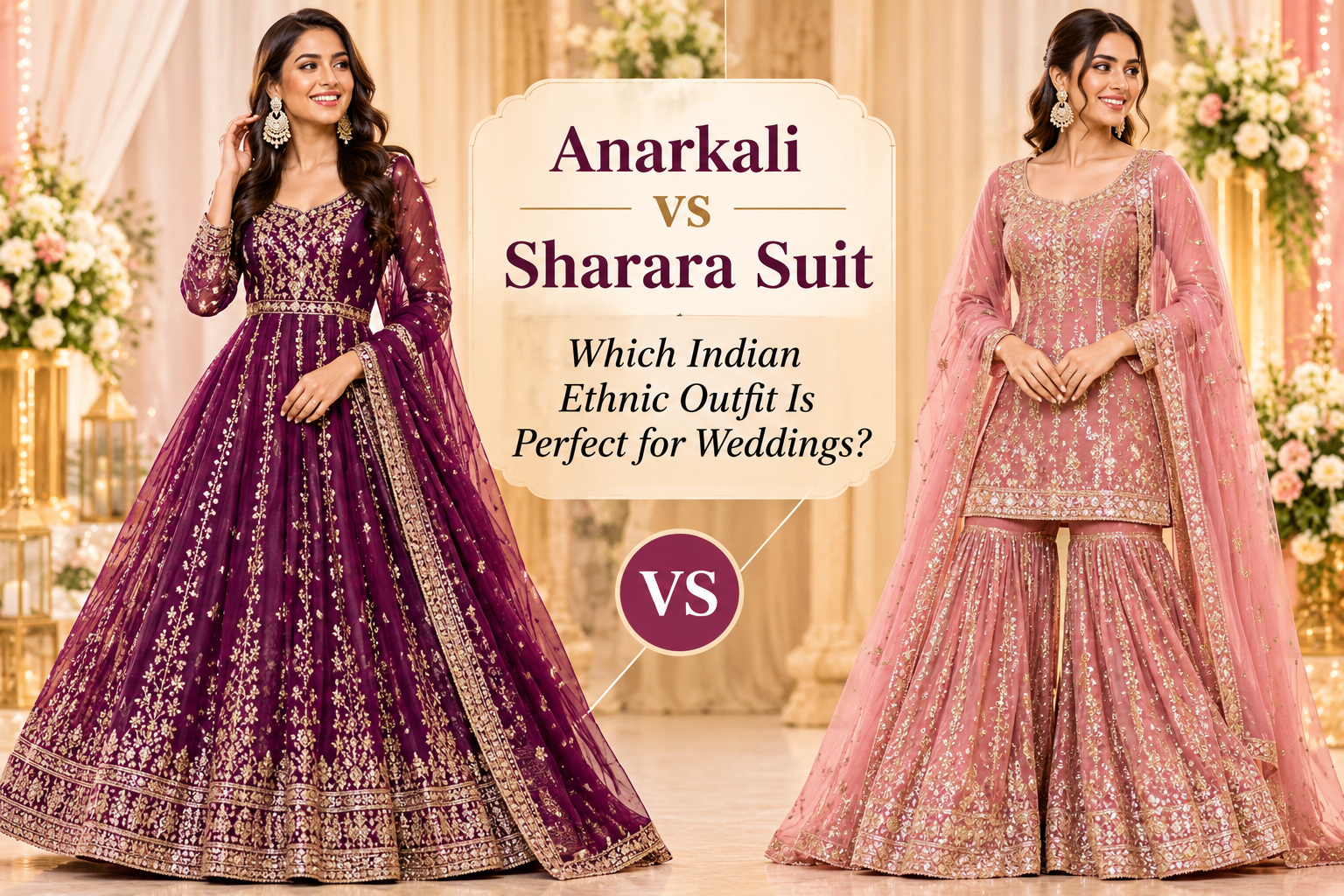
Indian fashion blends classic grace with modern edge. From grand wedding celebrations to those festive family meet-ups, carrying the right outfit can make everything feel extra special. And yeah, among all the traditional vibes, anarkali suits and sharara suits are still two top picks for women who love ethnic dressing.
Both outfits have their own charm; they show off elegant shapes and careful detailing, and they can be styled in so many ways. But choosing between them is quite difficult; it usually depends on the occasion, your personal style, comfort level, and the overall vibe.
So, the anarkali vs. sharara suit: which one feels better for weddings and festive celebrations? Let’s look at the differences and find out how to choose the perfect style.
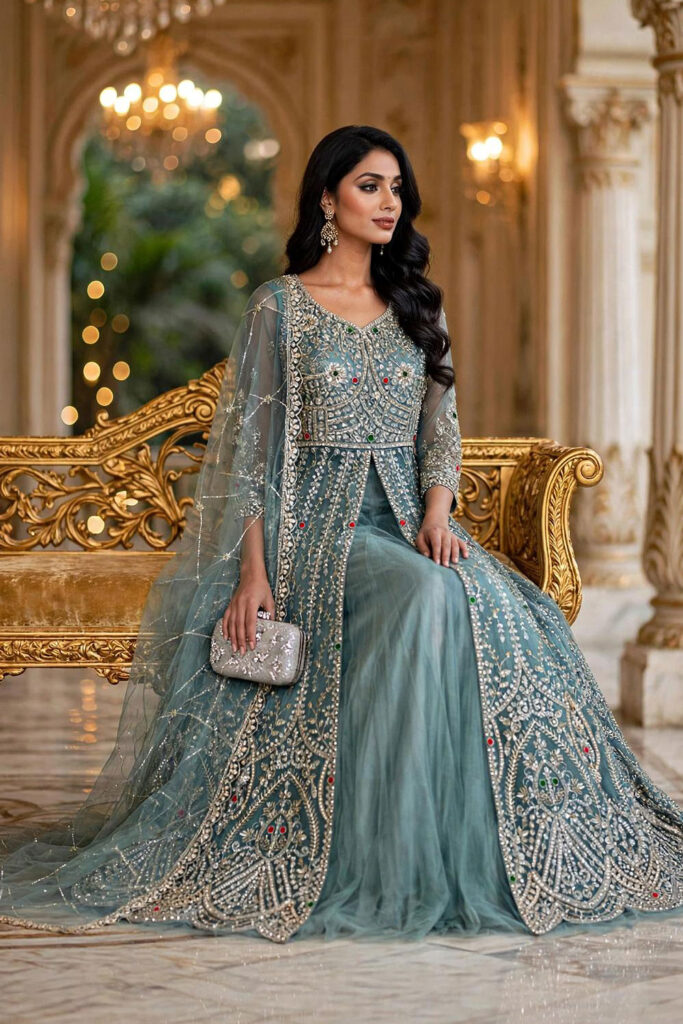
What Makes Anarkali Suits a Timeless Fashion Choice?
Anarkali suits are famous for their long, flared silhouettes that give them a smooth, graceful flow. This classic piece of Indian ethnic wear is inspired by Mughal fashion traditions, and it’s stayed popular because the design looks refined and the style just never really fades.
Today’s designer anarkali suits often come with detailed embroidery, embellished necklines, stylish sleeves, and rich fabrics. Depending on the outfit, you can get a soft festive look or go fully dramatic for a wedding ensemble.
Anarkalis are a great match for:
- Wedding ceremonies and receptions
- Engagement parties and family functions
- Diwali and other festive celebrations
- Traditional gatherings and formal occasions
If you’re aiming for grand celebrations, floor-length anarkalis with zari work, sequins, or intricate thread embroidery can be a perfect option. For daytime events, lighter cotton, georgette, and chiffon designs usually feel more comfortable, and they also look effortlessly elegant.
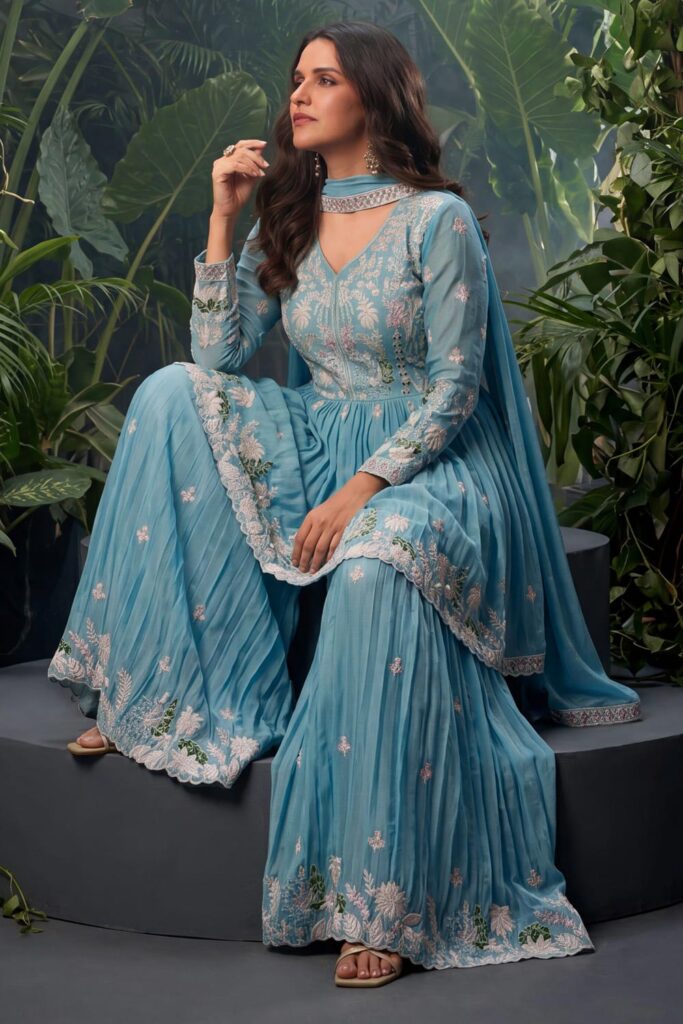
Why Are Designer Sharara Suits Popular for Celebrations?
Sharara suits blend traditional charm with modern fashion in a way that just looks right without trying too hard. And unlike designer anarkali suits, which usually have that flared upper silhouette, sharara outfits tend to come with a kurta matched with wide, flowy, flared trousers, or you can say sharara pants.
That dramatic lower shape really gives movement, and it also adds a statement element, like you notice the outfit even before anyone says anything. Nowadays, many designer sharara suits feature embellished kurtas, embroidered sharara pants, and a coordinated dupatta that ties the whole look together.
People love them for all moments, such as
- Mehendi and sangeet celebrations.
- Wedding receptions and pre-wedding functions.
- Eid and Diwali festivities.
- Cocktail-inspired traditional gatherings too, when you want something elegant but not boring.
You can also find sharara suits in many fabric options, like silk, velvet, georgette, and organza. Plus, the heavier detailing, like embroidery, mirror work, sequins, and other traditional embellishments, makes them perfect for occasions where you want a more festive appearance.
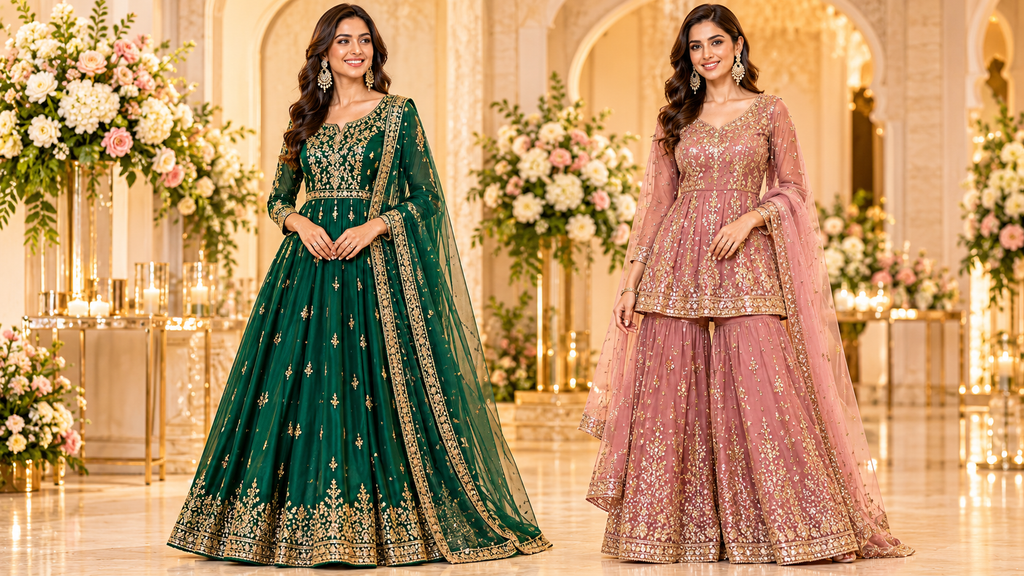
Anarkali vs Sharara Suit: What Are the Main Differences?
Both of these are part of traditional Indian dresses, although the way they fit on the body and how they are styled makes them look a bit different.
| Feature | Anarkali Suit | Sharara Suit |
| Silhouette | Long, flared kurta | Short or long kurta with flared trousers |
| Overall appearance | Graceful and flowing | Stylish and dramatic |
| Bottom wear | Usually churidar, leggings, or trousers | Wide-legged sharara pants |
| Styling | Elegant and traditional | Festive and contemporary |
| Best occasions | Weddings, receptions, and formal functions | Mehendi, sangeet, and festive parties |
| Accessories | Statement earrings and traditional jewelry | Jhumkas, maang tikka, and embellished footwear |
The big difference is their structure. Anarkali tends to make one continuous, uninterrupted, flowing silhouette, while a designer sharara suit mixes a fitted or semi-fitted kurta with these really dramatic, flared bottoms.
Still, both can look super classy if you pick them based on the event, like where you are going and the vibe you want.
How Do Salwar Suits Compare with Anarkali and Sharara Styles?
You know how anarkali and sharara sets tend to grab attention during big celebrations, but traditional salwar suits still end up being a necessary part of Indian wardrobes, honestly.
Most salwar suits usually come with a kurta, then a comfy salwar bottom, and they’re finished with a dupatta drape. This setup feels practical, and it works for daily life too, not only for special events.
When you place salwar suits next to anarkalis and shararas, you’ll notice more flexibility overall, especially for comfort and everyday styling. You’ll see straight-cut designs, Punjabi salwar kameez, embroidered sets, and Patiala suits as common go-to options.
For smaller family get-togethers, religious functions, or daytime celebrations, an embellished salwar suit can be a really good alternative to heavier outfits, without going overboard.
So yeah, all three looks still hold their place, and they each become useful picks in modern Indian ethnic fashion.
Conclusion
Anarkali suits and designer sharara suits both give a distinctive way to celebrate Indian fashion; honestly, it feels like they lean into slightly different vibes.
Anarkalis feel right for women who want that graceful silhouette and a timeless elegance, while shararas lean more toward dramatic shapes and a fresher contemporary festive look.
Meanwhile, the classic salwar suit still works as a practical choice for women who care about comfort, plus a softer, less loud elegance.
In the end, there really isn’t a hard, clear winner in the designer anarkali suits vs. sharara suit comparison; it’s more of a vibe thing. The best pick among these Indian dresses mostly depends on the occasion, what you personally like, and the overall look you’re trying to pull off. If you keep those points in mind, you can choose Indian ethnic wear that makes every wedding and festive moment feel truly memorable.