


Long before “happy little trees” became a household phrase, young Bob Ross lived a very different life. This guide explores his childhood, military service, and the surprising path that led him to painting.
Most fans know Bob Ross as the calm, soft-spoken host of The Joy of Painting. Few realize his early years looked nothing like the gentle persona millions came to love.
Who Was Bob Ross Before Fame?
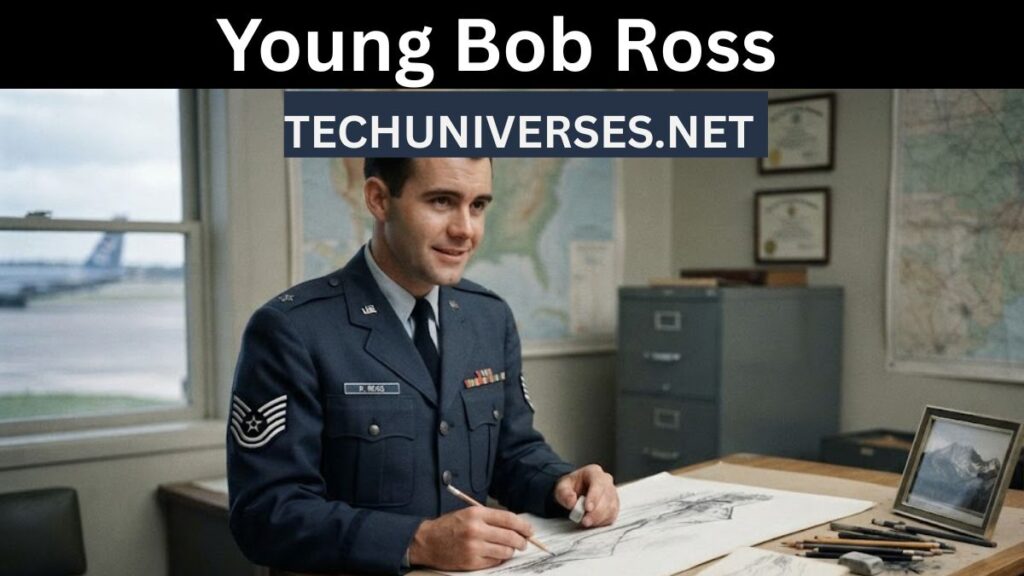
Bob Ross, born Robert Norman Ross, entered the world on October 29, 1942, in Daytona Beach, Florida. Long before picking up a paintbrush professionally, he lived a modest childhood shaped by hard work and family values.
His parents, Jack and Ollie Ross, raised him primarily in Orlando, Florida. Jack worked as a carpenter, while Ollie worked as a waitress, giving young Bob a working-class upbringing far removed from television fame.
Key facts about his early background include:
- Born October 29, 1942, in Daytona Beach, Florida
- Raised primarily in Orlando, Florida
- Father worked as a carpenter
- Mother worked as a waitress
- Had a half-brother named Jim
This modest upbringing would later shape both his work ethic and his gentle approach to teaching art.
A Childhood Love for Animals
Long before he was known for painting landscapes, young Bob Ross showed a deep affection for animals. Friends and biographers often describe him as an unusually gentle child.
He reportedly nursed injured animals back to health throughout his youth. In one memorable example, he raised a baby alligator in his family’s bathtub, foreshadowing his lifelong love for wildlife.
This early compassion for animals later became a defining trait of his adult personality. It also explains his famous on-screen companions, including his pet squirrel, Peapod, featured during his television career.
Early Work With His Father
As a teenager, young Bob Ross worked alongside his father learning carpentry. This hands-on trade seemed like a natural path for a young man from a working-class Florida family.
However, this chapter of his life ended abruptly. During his time working in carpentry, Ross suffered an injury that resulted in the partial loss of a finger.
This incident ultimately steered him away from carpentry entirely. While unfortunate, it opened the door toward a very different career path just a few years later.
Enlisting in the United States Air Force

At just 18 years old, in 1961, Bob Ross made a decision that would shape the rest of his life. He enlisted in the United States Air Force, beginning a 20-year military career.
Why He Couldn’t Fly
Despite joining the Air Force, Ross never became a pilot or flight crew member. His six-foot-two height and flat feet disqualified him from flying or working directly with aircraft.
Instead, he was assigned a desk role, working as a medical records technician. This administrative position would eventually lead him somewhere unexpected.
From Florida to Alaska
Roughly two years into his service, Ross was transferred from Florida to Eielson Air Force Base in Alaska. Located about 25 miles outside Fairbanks, this posting exposed him to landscapes he’d never experienced before.
Having grown up entirely in Florida, Ross had never seen snow or mountains in person before this assignment. This dramatic change in scenery would soon influence his entire artistic style.
Rising Through Military Ranks
Over his two decades of service, Ross steadily advanced through the Air Force ranks. His military career reflected discipline that would later carry into his professional life.
Becoming a Master Sergeant
By the end of his service, Ross had risen to the rank of Master Sergeant. This achievement reflected years of consistent performance and leadership within his role.
Serving as a Drill Instructor
One of the most surprising aspects of young Bob Ross’s military career involved his role as a drill instructor. This job required him to be strict, demanding, and often intimidating toward new recruits.
Ross later described this period candidly, admitting the role required him to be tough and stern. He reportedly promised himself that if he ever left that environment, he wouldn’t carry that harshness forward.
First Sergeant at the Base Clinic
Beyond his drill instructor duties, Ross also served as first sergeant at the base clinic in Alaska. This position combined administrative responsibility with direct oversight of clinic operations.
Discovering Art in Alaska
While Ross’s military career kept him busy, it also introduced him to the hobby that would eventually define his life. His artistic journey began almost by accident.
The Anchorage USO Club
Ross took his first painting lessons at the USO Club in Anchorage, Alaska. This casual introduction to art would ultimately reshape his entire future.
Learning the Wet-on-Wet Technique
During this period, Ross was introduced to instructor Bill Alexander, who taught the now-famous wet-on-wet painting technique. This method allowed artists to complete full landscape paintings in a remarkably short time.
Ross later credited this technique as fundamental to his artistic development. It became the signature style he would eventually teach to millions of television viewers.
Painting Alaska’s Landscapes
The dramatic scenery surrounding Eielson Air Force Base directly inspired much of Ross’s early artwork. Snow-capped mountains and untouched valleys became recurring themes throughout his career.
Many of the landscapes featured decades later on his television show trace their inspiration back to this Alaskan military posting. Without this assignment, his artistic style might have looked entirely different.
Selling Paintings on the Side
While still serving in the military, Ross began selling his artwork informally. This side venture offered an early hint of his future career direction.
Painting on Gold Prospecting Pans
One of his more unusual early ventures involved painting Alaskan landscapes directly onto gold prospecting pans. He sold these unique pieces to tourists visiting the region.
A Turning Point in Priorities
Eventually, Ross noticed something significant: he could earn more money selling paintings than through his military salary alone. This realization played a major role in his eventual decision to leave the service.
Leaving the Military Behind
After 20 years of service, Ross made the decision to leave the Air Force entirely. This choice reflected both his growing passion for art and his desire to leave behind the harsher aspects of military discipline.
A Promise to Himself
Having spent years as a demanding drill instructor, Ross reportedly vowed to become a kinder, gentler version of himself once he left the military. This promise would later define his entire on-screen persona.
Returning to Florida
Following his military discharge, Ross returned to his home state of Florida. There, he pursued formal art education, studying under various instructors to refine his growing skills.
Studying Under Bill Alexander
Ross’s relationship with instructor Bill Alexander extended beyond their initial meeting in Alaska. Alexander’s influence remained central to Ross’s artistic development for years afterward.
Ross frequently credited Alexander as his primary mentor throughout his early painting career. He would later dedicate the very first episode of his television show specifically to honoring this mentorship.
Building Skills Through Formal Art Schools
After leaving military life, Ross attended various art schools and painting classes to further develop his technique. This period of formal study helped refine the skills he’d first discovered informally in Alaska.
Combining his natural talent with structured education, Ross gradually developed the confident, efficient painting style that would later captivate television audiences worldwide.
Personal Life During His Early Years
Beyond his artistic development, young Bob Ross also built a personal life during this formative period. Understanding his relationships adds important context to his broader story.
First Marriage
Ross married his first wife, Vivian Ridge, in 1965, during his active military service. The couple later divorced in 1977.
Starting a Family
During this period, Ross became a father, raising children who would later carry forward parts of his artistic legacy. His son Steven Ross eventually became a certified instructor of his father’s painting technique.
A Private Personality
Despite his eventual fame, Ross remained notably private throughout his life. Biographers often note the scarcity of personal interviews, making detailed information about his early years harder to piece together than one might expect.
How His Early Life Shaped His Television Persona
The contrast between young Bob Ross’s military discipline and his later television gentleness remains one of the most fascinating aspects of his story. Understanding this transformation adds depth to his public image.
From Strict to Soft-Spoken
The same man who once shouted orders as a drill instructor later became known for his calm, whisper-soft narration style. This dramatic shift wasn’t accidental, it was a deliberate choice.
Discipline Applied Differently
While Ross left behind the harshness of military instruction, he retained the underlying discipline it instilled. This structure later shaped how efficiently he could complete full paintings within a 30-minute broadcast window.
A Business Built on Military Precision
When Ross eventually founded Bob Ross Inc. alongside business partner Annette Kowalski, colleagues noted his highly organized, disciplined approach to running the company. This management style directly traced back to lessons learned during his two decades in the Air Force.
Why Understanding Young Bob Ross Matters Today
Exploring Ross’s early years offers fans a deeper appreciation for the man behind the iconic television persona. His journey from carpenter’s assistant to drill instructor to beloved art teacher reflects genuine personal transformation.
This backstory also helps explain the authenticity fans continue to connect with decades later. The calm, patient teacher millions came to love wasn’t simply a television character, it was the product of real personal growth.
Conclusion
The story of young Bob Ross reveals a far more complex path than most fans realize. From a working-class Florida upbringing to two decades of military discipline, his journey toward becoming America’s most beloved art instructor was anything but straightforward.
Understanding this early chapter of his life adds meaningful depth to the gentle, reassuring figure millions grew to love on The Joy of Painting. His transformation from strict drill instructor to soft-spoken art teacher remains one of the most compelling personal journeys in television history.