

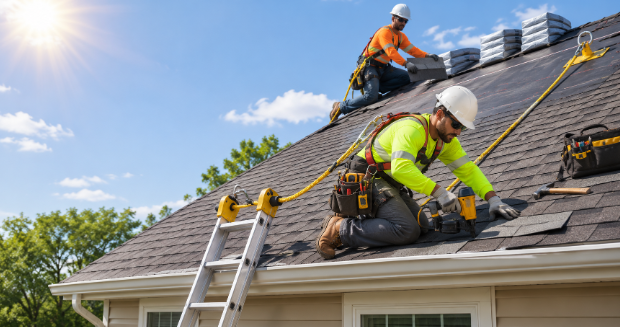
Roofing is one of the most physically demanding trades, and work at height carries real risk. Falls, equipment failures, and heat exposure can change a worker’s life in seconds. Homeowners, contractors, and crew members all benefit from knowing the common hazards, the injuries that often follow, and the safety practices that reduce danger. Understanding how a roofing accident happens is the first step toward preventing one. This article explains the leading causes, the types of harm workers face, what to do after an incident, and the prevention steps that employers and workers can use to stay safer on the job.
Why Roofing Work Carries Higher Risk
Roofs are sloped, exposed to weather, and often high above the ground. Workers carry heavy materials, climb ladders, and move across surfaces that may be wet or hot. The U.S. Bureau of Labor Statistics reports that falls, slips, and trips are a leading cause of death in construction. The Occupational Safety and Health Administration (OSHA) requires fall protection in construction at heights of six feet or more. One missing safeguard can turn a routine task into a serious roofing accident.
Common Causes on the Job
Falls from roof edges, skylights, and ladders are the best-known hazards. Other causes include damaged roof decking, unprotected openings, and slippery surfaces from rain, frost, or loose debris. Electrical shock can occur when tools or ladders touch overhead power lines. Dark roofing surfaces absorb sunlight, which raises the risk of heat illness in summer. Strong winds can also unbalance workers carrying large materials. Limited training, rushed schedules, and poorly maintained equipment often make each hazard worse.
Injuries Workers May Face
The harm from a fall depends on height, landing surface, and force. Common injuries include fractures in the wrists, legs, and spine, along with head and brain injuries. Knee injuries can also occur, since landing on the feet or twisting on uneven footing may damage ligaments, cartilage, or the kneecap. Burns, cuts, and electrical shocks add further risks. Some injuries require surgery and long rehabilitation, which can affect a person’s ability to work or handle daily tasks. Recovery time varies widely from person to person.
What to Do After an Incident
Safety and medical care come first. Call emergency services for any serious injury, and avoid moving someone with a suspected head or spine injury unless danger is immediate. Report the incident to a supervisor as soon as possible. Write down the date, location, conditions, and witness names, and take photos if it is safe. Keep copies of medical records and any reports. Workers’ compensation rules differ by state, and filing deadlines can be short. A roofing accident may also involve third parties, such as property owners or equipment makers, which can affect available options.
Prevention Steps for Safer Roofs
Prevention starts with planning. Employers should inspect each roof before work begins, checking for weak areas, openings, nearby power lines, and weather. Guardrails, safety nets, or personal fall arrest systems should be in place and inspected regularly. Ladders must sit on stable ground and be secured. Workers need training in hazard recognition, equipment use, and emergency procedures. Non-slip footwear, hard hats, and gloves add another layer of protection. Regular safety meetings help crews review hazards and update plans as conditions change.
Conclusion
Roofing will always involve risk, but many incidents can be avoided with planning, training, and proper equipment. Workers who know common hazards and speak up about unsafe conditions protect themselves and their crews. After an injury, prompt medical care and careful records matter. Those with joint damage after a fall may want to speak with a Los Angeles knee injury lawyer to understand how California rules apply to their situation. Employers, in turn, should treat safety as a daily habit rather than a checklist. Safer roofs begin with informed choices and steady follow-through.