

You have spent months learning to code. Late nights, broken builds, a bug that vanishes the moment someone else looks at it. There is real work sitting in your GitHub account.
Then you open a junior developer advert and hit the line that stops you cold: previous professional experience required.
It stings, and it shouldn’t. Having no job history is not the same as having nothing to show.
A well-explained project can tell an employer more than a job title ever could. Many people just list languages and buzzwords.
What gets you noticed is not what you built. It is how you thought while building it.
1. Why Projects Carry So Much Weight
Nobody reading a junior CV expects years of production experience. They are looking for signs that you can take a vague problem, make sensible decisions and finish the job.
A final-year project does this well. Take an online appointment booking system. It needs a database, a customer interface, secure login and validation so two people cannot book the same slot. That is dozens of decisions, many of them professional ones.
Career changers have the same edge. An accountant who built an expense-sorting tool has shown the most valuable thing: code solving a real problem.
A project becomes CV evidence when a stranger can understand your contribution without guessing.
2. Where Most People Go Wrong
Choosing is harder than it sounds. Include everything and the CV bloats.
Don’t reach for the biggest project by default. A polished tutorial clone is weaker than a small app you designed yourself, because you can explain every choice.
Then there is the wording. Take this line:
Developed a website using HTML, CSS and JavaScript.
Nothing wrong with it, except it answers nothing. What did the site do? Was it responsive? Did it call an API? How was user input handled?
Group work makes it messier. If one person built the database, another the interface and a third did the testing, writing “the application” hides who did what. Interviewers will ask.
If much of a project came from a tutorial, say so, and say what you changed.
3. Ideas Worth Knowing
You do not need to explain theory on a CV. Knowing it simply helps you spot which parts of a project deserve a line.
Writing it up is the harder part. You know what you meant, so you read your own descriptions generously. An outside reader only has the page. A developer friend or a Software Engineer Resume Writer will quickly show you where a claim stops making sense.
Life cycle thinking. A shop app is more than product pages and a basket. What happens to an order when stock runs out? Mention one case like that and you show you considered the whole system.
Agile. If your project grew through repeated testing and refinement, say so. “Released a working booking form first, then added reminders after testing” is more convincing than the word “Agile”.
Object-oriented design. Don’t just list “OOP” in a skills section. Say you separated customer, product and order logic into different classes, and why: it made changes easier without breaking other parts.
Testing and debugging. Say what you tested and how. Unit tests check single components; integration tests check how parts work together. One bug, traced and fixed, is worth more than a list of tools.
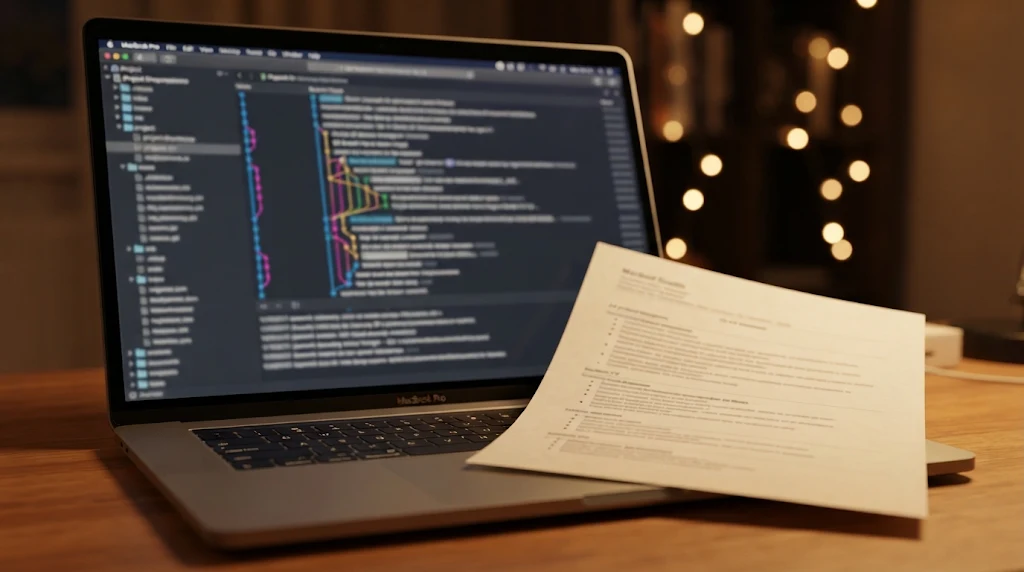
Version control. A commit history that tells a story is a quiet but strong signal.
4. What Employers Actually Look For
Start with the role. Backend work leans on queries, APIs and server logic; frontend on responsive layouts, accessibility and interface behaviour. You don’t need a new CV per vacancy, but the top projects should match the job.
Explain technology in context. Naming Python, Django or PostgreSQL is fine; saying how they made the app work is better. If you chose PostgreSQL over a document database, say it suited structured, consistent data.
Try the 20-minute break-it test. Before any project goes on a CV, spend twenty minutes trying to wreck it. Submit empty forms. Paste in absurd input. Open two browser windows and book the same appointment at the same moment.
Then write one line about what you found:
Found that simultaneous bookings created duplicates; added a safeguard and retested with concurrent requests.
The right fix depends on how your application is designed. It might be a database constraint, a transaction or a locking approach. What matters is that you can say why you chose it.
That sentence shows reliability thinking many graduate CVs skip. A project that works with sample data is a starting point. One that survives awkward situations is evidence.
5. Practical Guidance
Pick two or three projects that match the roles you want. Build each description around four questions:
- What problem did it solve?
- Which technologies did you use, and why?
- What did you personally build?
- How did you test it?
Compare these two. Weak: Created a library management system using Java and MySQL.
Stronger: Developed a library management application in Java and MySQL with book registration, borrowing records and database queries. Designed the database structure, added input validation and tested borrowing and returns to find and fix errors.
The second version works because it says what was built, what you personally did and how you checked it. Each part gives an interviewer something specific to ask about.
For internships, describe real tasks: bugs fixed, tests written, code reviewed. For open source, name the repository, the issue and whether your change was merged.
Before adding a GitHub link, open it as a stranger would. Is the purpose clear within thirty seconds? A short README with a screenshot is plenty.
6. Mistakes to Avoid
- Padding with filler projects. Five unrelated assignments dilute the one that matters.
- Overstating your skill. Experimenting with a framework is not the same as maintaining an app built in it. Follow-up questions in an interview usually reveal the difference.
- Claiming a whole group project. Name your part and credit the team.
- Hiding the problems. Explaining what broke and how you fixed it shows more understanding than a flawless story.
- Listing features, not purpose. “Login page” is a feature. “Authentication controlling access to user accounts” says what it does.
- Calling unfinished work finished. State what works, what doesn’t and where the limits are.
7. Final Thoughts
Projects don’t impress by using five frameworks or thousands of lines. A smaller app, built carefully and understood fully, is better evidence.
Technical judgement shows in small decisions: why you chose that database, what you tested, what you left out and why.
So before any project goes on your CV, ask one thing: if an interviewer picked any line and asked how it worked, could you answer calmly and honestly?
If so, you are not just listing what you built. You are showing how you think.